
New research raises concerns about Essure, an implanted long-term birth control device that's already the focus of controversy.
Researchers found a 10-fold higher risk of needing a re-operation during the first year for women who choose the Essure device, compared to those who had minimally invasive surgery for sterilisation.
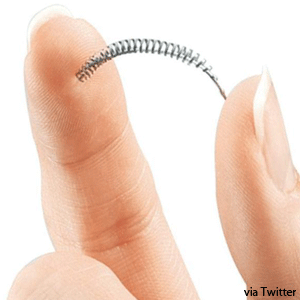
Essure works to prevent conception by blocking the fallopian tubes with metallic coils.
 Complaints of complications
This isn't the first time the device, first approved by the U.S. Food and Drug Administration in 2002, has come under scrutiny.
In September, an FDA panel reviewed the safety of the device after receiving complaints of complications from users. Abdominal pain was the side effect most often reported by women to the FDA, followed by heavier menstrual periods.
The panel said that while complications have been reported, they haven't increased since the approval of the device. However, the agency said it plans to continue to monitor the safety of Essure.
The new study focuses on the need for new surgical procedures tied to use of Essure. Study co-author Dr Art Sedrakyan, a professor of Healthcare Policy and Research at Weill Cornell Medical College and New York Presbyterian Hospital in New York City, estimated that more than 10,000 U.S. Essure patients have needed reoperations over the past few years.
Researchers found a 10-fold higher risk of needing a re-operation during the first year for women who choose the Essure device, compared to those who had minimally invasive surgery for sterilisation.
Essure works to prevent conception by blocking the fallopian tubes with metallic coils.
This isn't the first time the device, first approved by the U.S. Food and Drug Administration in 2002, has come under scrutiny.
In September, an FDA panel reviewed the safety of the device after receiving complaints of complications from users. Abdominal pain was the side effect most often reported by women to the FDA, followed by heavier menstrual periods.
The panel said that while complications have been reported, they haven't increased since the approval of the device. However, the agency said it plans to continue to monitor the safety of Essure.
The new study focuses on the need for new surgical procedures tied to use of Essure. Study co-author Dr Art Sedrakyan, a professor of Healthcare Policy and Research at Weill Cornell Medical College and New York Presbyterian Hospital in New York City, estimated that more than 10,000 U.S. Essure patients have needed reoperations over the past few years.
How safe is the Essure birth control
![How safe is the Essure birth control]() Reviewed by Vita Ioanes
on
Sunday, October 18, 2015
Rating:
Reviewed by Vita Ioanes
on
Sunday, October 18, 2015
Rating:


No comments: